Tuesday, April 29, 2014

Commencement Speaker Rights and Wrongs

Rutgers University once again has made the news for a speaker invitation. Some 50 students occupied a stairway in the administration building protesting selection of former presidential advisor and Secretary of State Condoleezza Rice as this year's commencement speaker.

The protesters left peacefully after an ultimatum by school administrators. Outside the building, some of them joined about 100 others carrying signs and shouting slogans criticizing Miss Rice's role in starting the second Iraq war. Meanwhile, 350 faculty members voted to oppose the campus appearance. So far, the school president is sticking with the speaker selection, citing academic freedom and free speech ideals as his justification.

University officials had a right to invite anyone they chose to speak at the school.

Students and faculty had a right to peacefully protest the selection.
 
A peaceful protest made the students' point.
The geezer fully supports those rights. What is wrong is the fact that Miss Rice will be paid $35,000 for her half-hour speech. Like many other universities, Rutgers has been going through tough financial times. Economy measures in recent years included freezing the salaries of thousands of employees and many program reductions.

That Miss Rice's fee will be paid by private donations to the university's foundation doesn't make it right. That the fee is modest on the scale of commencement awards, which range from about $2,500 to more than $100,000, doesn't make it right. All commencement speaking fees are wrong. That money could be better spent helping needy students with expenses or supporting essential academic programs.

Any potential speaker with a sense of public service responsibility should be willing to honor a graduating class with his or her words of wisdom for nothing more than travel expenses. An honorary degree (and Miss Rice will get one of those, too) of course is a justifiable speaker reward.

Rather than fixing the problem, Rutgers has raised the ante. Back in 2011 it paid the commencement speaker only $30,000. That wasn't newsworthy, but when students used $32,000 of their activity fees to pay for an appearance by Snooki, infamous as a vulgar sex kitten on the "Jersey Shore" television show, Rutgers got a dose of media attention. Snooki told her audience to "party hard," among other things.

Paying a sex object more than a commencement speaker perhaps is justified. I've fidgeted through several lengthy graduation ceremonies. I can't remember a word any of the distinguished speakers uttered. I probably would have paid much more attention to Snooki.

U.S. higher education cries out for reform. A small, but good, start would be rerouting speaker fees to deserving students and academic programs.

Wednesday, April 23, 2014

Good People Make Good Places

While I was trying to decide what I wanted to be when I grew up, a process still under way, our son had little choice but to come along on the trip. It was quite a journey. We lived in eight different cities while Lee was growing up.

Lee proved there may be truth to the currently overused pronouncement: "What doesn't kill you makes you stronger."

No doubt it was difficult for Lee to periodically leave good friends and adjust to a new community and school. I've often regretted causing those problems for him. But I think he became a man of integrity and honor who has been able to adapt to difficult situations partly because of his diverse experiences. The nature of two communities we lived in may have contributed positively to his development.

Forbes latest list of the top 10 best places to raise a family in the U.S. includes two cities where we have lived. Forbes ranked metro areas based on household incomes, costs of living, housing affordability, home ownership, commuting times, crime rates, and local school quality. Lee attended school and participated in organized sports in two of the top 10--Boise, Idaho, and Ogden, Utah.
 
Ogden, Utah, is a great place to live in any season.
Ogden was No. 3 in the rankings. It has one of the lowest crime rates in the country, an excellent spread between incomes and living costs, and great access to outdoor activities. Lee learned to ski nearby; a trip to the mountain slopes was just a few miles from our first home there adjacent to a Wasatch-Cache National Forest boundary. Lee made school friends in Ogden with whom he still stays in touch.

Boise ranked as the seventh best place for families on the Forbes list. Boiseans also enjoy a good income to cost of living ratio and great opportunities for outdoor lifestyles. School quality rated high and the crime rate is low. Several of Lee's early school years were spent in Boise.
 
Boise, Idaho, has a State Capitol and much more to recommend it.
Lee, Sandy, and I conferred today about characteristics of the places we've lived. We agreed the Forbes people got it right with Ogden and Boise. But, because it would be almost impossible to quantify, the raters didn't consider the factor we believe was most important. We all thought the people in those two cities generally were pleasant, thoughtful, and helpful. For us, good people made Ogden and Boise good places to live.

This might lead you to think I was pretty smart about picking places to apply for jobs. Not so.

We had never set foot in Idaho before moving to Boise. The only individual consulted was my sister, who knew a little about the city because her husband worked for Boise-Cascade and they had visited company headquarters a few times. The endorsement was lukewarm at best. Jane's final statement was, "I suppose its OK if you like sagebrush." We made the change simply because it was time for me to move on.

We moved to Ogden strictly to get a Forest Service promotion and the improved income that came with it. Most of the comments I heard before the move were negative, but that was because my boss (who had lived in Ogden earlier) mounted a campaign to convince me not to leave Idaho. Some of it was absurd.

The most imaginative, and least convincing, statement by Boise National Forest Supervisor Ed Maw was, "Those Mormons will steal your horse; then they'll steal your wife."

Well, I didn't own a horse, and Sandy has stayed on as my beautiful wife to this day. We didn't find a lot of bad guys in Utah. What we did find in Ogden, just as we did in Boise, were good neighbors and friends.

Friday, April 04, 2014

Give Us This Day . . .

Those words are known to all of us raised as Christians who comprise the majority of Americans.  Yet our elected representatives, who claim divine guidance for many questionable actions, continue to block efforts to ensure that millions of American workers are paid enough to feed their families.

Congress has failed to act on proposals to raise the federal minimum wage from $7.25 per hour to $10.10. Here in Michigan, and in other states, legislatures also are refusing to raise minimums that qualify full-time workers in many occupations for food stamps. They need the food stamps, paid for by taxpayers like me, to feed their families. Thus, we taxpayers are subsidizing businesses that refuse to pay their workers a living wage.

Many owners of those businesses argue that they will be forced to eliminate workers if they are required to pay decent wages. There is a body of research in this area. Most of the better designed studies find few if any jobs would be lost.  

Political philosophies aside, it is a fact that the federal minimum wage adjusted for inflation is one third lower than it was in 1968. It simply is not fair pay for those who serve our meals, clean our buildings, and care for our sick and elderly.

Two members of a discussion group I coordinate are among those circulating petitions designed to force an improvement in Michigan. The change would be far from drastic. Over three years, the state's minimum wage would be increased from $7.40 per hour to $10.10. The minimum for those who depend on tips, which currently is below $3.00 per hour, also would be raised. To keep the playing field level, the minimum wage would be tied to inflation in the future.

I had to think for as long as it took to find a pen before signing. 

We should be ashamed that Americans working full-time at the bottom of the economic scale cannot afford to buy their daily bread. They should not have to depend on welfare for the most basic of human needs. We need to change this situation.

Wednesday, March 19, 2014

Don't Shoot . . . Sanction

Let's see now . . . Vladimir Putin couldn't wait until May 25 for a scheduled referendum that probably would have paved a peaceful and fairly acceptable way for the Crimean Peninsula to leave Ukraine and return to Mother Russia, its home for much of modern history. For reasons unclear, Putin decided to strong arm his way in with a show of military force to back a puppet Crimean Premier who obligingly rushed a vote with predictable results.

A solid majority of  residents of Crimea are ethnic Russians who speak Russian. Most of the minority Tatars and Ukrainians refused to vote as a protest of the Russian power play. The vote was overwhelmingly pro-Russia. Surprise! The process of incorporating the peninsula into the Russian Federation has begun.

It is unlikely that Ukraine will make any military response. Crimea has provided bases for Russia's Black Sea Fleet for
200 years. A recent estimate put the force at 24 warships, two submarines, and 16,000 sailors and marines. On top of that, Russia has sent several thousand more troops, with insignia removed, into the peninsula since its power play started. Ukraine has nothing in the area to match that sort of strength. Taking on Russia in a full-scale attack along its lengthy border to the north would be suicidal.

Meanwhile, Barack Obama informed the world that if what has happened were to happen, Russia would face "serious consequences." Lots of people, apparently including Putin, aren't taking that message very seriously. So far, the consequences have been freezing bank accounts of a few dozen individuals who promoted the Crimean spectacle. The U.S. seized some assets, the European Union froze more.

What more-serious actions are likely to take place? Not many. The parties involved are entirely too much involved in the world of business to take a dive into the world of war. They depend on each other.

Nearly two thirds of Russian exports are gas and oil, and about half of that is sold to European Union countries. France has lucrative contracts to build Russian ships. Germans have some $22 billion invested in assets within Russia. British bankers profit handsomely by serving as a financial center away from home for Russian billionaires.  The unhealthiest U.S. symbol, the Golden Arches, appears across the Russian landscape, as do other American corporate logos.

It looks like a classic standoff. It probably will stay that way unless the few observers who think Putin has lost his mind are right. Could it be world leaders finally will act with wisdom rather than playground bravado that in the past has escalated into wars bringing misery to millions? Lets hope they continue to fire off sanctions, not missiles.


Thursday, March 13, 2014

Are We Out of Respect?

A Facebook group amuses members by posting historic photos from my hometown of Tomahawk, Wisconsin. Each post usually touches off a string of comments. Most of the writers are men and women who were in grade or high school in the 1960s or 70s.

A picture of a grade-school classroom in a rural school appeared last week. It touched off a lengthy discussion of people known to have been on the faculty. The 60- and 70-year-olds writing comments referred to the teachers this way: Mr. Obey, Mrs. Leverance, Mrs. Sparks, Mr. Schindler, Mrs. Jackson, and Mrs. Wurl.

Notice anything? An old friend once told me that growing up in a small city in Oregon he and his friends seldom knew the first names of adults--because it was completely unacceptable for kids to use them. I'm told that was true elsewhere, and it was in my hometown, especially in the schools. If we knew the first name of a teacher, we did not use it, at least openly.

As youngsters, we often created derogatory nicknames for other kids and a few adults. It frequently was a form of bullying among school children. But in the case of adults, the labels stayed just between us kids. We were extra-careful about using the names in the grown-up world.

Teachers got an extra measure of respect. Beautiful wife Sandy and I carefully searched our memories and could come up with only one case in each of our school experiences where a nickname was coined for an adult. One of Sandy's teachers got the honor. In my school, only one administrator was tagged. Both insulting labels had to do with a shortage of hair on the heads of the victims.

The geezer no longer is in direct contact with practices in our schools, but a brief internet search reveals differences, and some controversy, about how students address their teachers. Apparently, in the early grades some teachers encourage use of their first names by the kids. That practice continues into the higher grades in some systems. Other school districts change the protocol as students advance.

Several stories spoke of  school districts changing policies to force a return to the old "Mr., Mrs., Miss," or perhaps "Ms." titles of respect at all times. I didn't find any accounts of school administrations endorsing, "Hey, Dude."

Thursday, March 06, 2014

Old Dad Was No Dummy

My father's formal education ended after the fourth grade, yet he had plenty of smarts. He was fluent in two languages, was capable of running a small business well, served his community in many ways, and presided over a successful family (men were in fact the authority figures in most American families in his day).

Dad didn't spout a whole lot of advice about how other people, including his children, should live their lives. I've only carried a handful of his thoughts on my journey. One guideline goes like this, "In any business deal, make sure you hold the money if you can."

That wisdom about putting yourself in the power position has worked for me for a long time. This morning, it came to mind once again.

A computer message advised that the local electric company was about to make its routine monthly charge to my credit card---for $631. My typical bill in winter months is $80 to $90. Yikes! I was on the phone in a hurry. The message said the charge would be made in two days.

Some 15 minutes on hold while various irrelevant recorded messages played gave me time to calm down and assess the situation. Because I had agreed to an automatic credit charge, the company in effect would be holding my money until the situation was resolved. By automating a monthly task to avoid paying a bill with an envelope and postage stamp and to collect a one percent cash-back bonus, I had put the wrong party in control.

When I finally got through to a service rep, I was assured that someone would be out today to reread my meter. "Then what?" I asked.

"The charge to your account probably will be adjusted in about a week."

I asked the rep to cancel my automatic payment authorization and have the corrected bill mailed to me. She reluctantly agreed.

Now I'm in the power position. It will be a cold day in you know where before that company gets a $631 payment from me. Dad would be proud.

Thursday, February 27, 2014

Writers Don't "Love" to Work

The geezer long has argued with those who cheerfully exclaim, "I just love to write!" I've been at it for a bit more than a half-century, and creating new deathless prose still qualifies as work, not pleasure.

The fun part, I maintain, is that good feeling when you think you've turned out something worthwhile. Even more satisfying is the discovery that someone bothered to read it. And if anyone says they liked your offering--WOW!

I think what does apply to the hundreds of writers I've edited and the many others I've shared thoughts with over the years is this: It is not the act of writing writers love, it is the result (when the result is even a little bit positive).

Today, with expectations of at least a trifling reward, I fully intended to concentrate in solitude and create a brilliant, fascinating, compelling post for your approval. Darn, a whole lot of important tasks took precedence. I'll just have to wait for another time to feel the love.


Monday, February 17, 2014

It's Just Not Fair

Five years ago, we lived adjacent to the seventh fairway of a very nice golf course near Ogden, Utah. Today, course management announced the front nine will be open for play tomorrow.

We now live next to the eighteenth green of a very nice golf course near Plainwell, Michigan. It started snowing once again about an hour ago. Forecasters say we can expect three to seven inches by tomorrow morning, which should make average snow cover on the golf course nearly two feet. Course management has not even thought about an opening date.

Boo hoo.

Thursday, February 06, 2014

Beating the Bulb

With a participant in our midst who had actually studied the situation, our last discussion group meeting turned to pondering the relative environmental and economic benefits of various types of light bulbs.

Some favored CFLs (compact fluorescents) as an inexpensive and long-lasting change from traditional
Will it outlast me?
incandescent bulbs. CFLs are a good choice for some places in the home, such as closets, but they present disposal problems.

LEDs (light-emitting diodes) cost much more, but last far longer, and by far are the most environmentally friendly of the choices. The prices of LEDs are dropping, and the selection is expanding, so there is little doubt these will be the choice of the future.

In our home, we're in transition mode. We have invested in a few LEDs, starting with outdoor holiday lights. We have CFLs in the garage, some exterior lights, and all our closets. We continue to use up our supply of incandescent bulbs. When one size is gone we make a spot decision to go with a CFL or LED.

One participant in the discussion said it mattered little to him because he had a big supply of the old incandescent bulbs that probably would last longer than he would--he was loathe to throw them out.

Group members once worried occasionally about outliving their money in retirement. Now we face another worry--a concern that without careful planning we may not outlive our light bulbs.

Wednesday, January 22, 2014

NFL Champs: Seattle Never, Denver Hardly Ever

The geezer is trying to whip up enthusiasm for this year's Super Bowl despite the fact that a couple of expansion teams are vying for the Lombardi Trophy. Denver wasn't admitted to the National Football League until 1970. The Seattle franchise is even younger; it didn't sign on until 1976.

Oh well, backers of teams that have been playing the game since the 1920s and 30s can afford to be charitable. My guys, the Green Bay Packers, have won the championship 13 times. Seattle? Never. Denver  only twice.

Back next year? Maybe.
NFL clubs with some history--da Bears, Cardinals, Giants, Lions, Eagles, Redskins, and Packers--can only hope to add to their laurels in the future. The usual cry of "Wait Until Next Year" is already reverberating around the league.

If it doesn't happen for your favorites right away, don't give up. The geezer once waited nearly 30 years for the Pack to get back. A long drought just makes savoring a new title all the sweeter.

The geezer's Super Sunday pick: Seattle by 3. That will give them one.

Thursday, January 16, 2014

Merry Birthday II

Some folks still may be laughing it up as we reach the end of the season to be jolly, but about this time of  year members of my family often suffer from celebration burnout. Our problem is caused by a concentration of birthdays.

There's a somewhat unusual history of holiday birthdays in my family. My grandfather was born on Christmas Day in Germany in 1855. My father was born on Christmas Day in Wausau, Wisconsin, in 1891. I broke the chain. My birthday is on New Years Day.

I don't know how being a Christmas baby affected grandfather's life, but it had a bit of negative impact on
dad. He was subjected to "one for two" gifting. He got more than his share of packages at our Christmas morning present openings marked "Merry Christmas and Happy Birthday."

My New Years Day arrival might have been expected to improve dad's fortunes to compensate, but it didn't. Merchants in my hometown showered gifts on the mothers and fathers of the year's first-born. It was a small city, and  sometimes the first baby of the year didn't arrive until Jan. 3 or 4. However, the one doctor who specialized in assisting at baby deliveries was busy on my birthday. I was the fourth child born that day. My family got no gifts nor headlines in the local paper.

Well, I did present dad with a full year's tax deduction, right? Yes, but his business was doing so poorly at the time that he had no profits and therefore no income taxes to pay. My new dependent deduction had no value.

Lee broke the family tradition of male holiday births when he waited until February 11 to arrive, but he contributed to our present birthday burnout situation. Karen's birthday is Jan. 8 and Sandy's comes not long after on the 21st. The four of us who live in close proximity thus require gifts and parties four times within about six weeks. That's a lot of partying, especially closely following the Christmas season.

Karen proposed a plan to make the 2014 B-Day time happier for all. Each birthday will feature the usual gift opening, but this time at a low-key private gathering for dessert and drinks in the evening. We will have one gala event on Jan. 25 to honor all four of us. It should be a good party, and one will be quite enough, thank you. 

Thursday, January 09, 2014

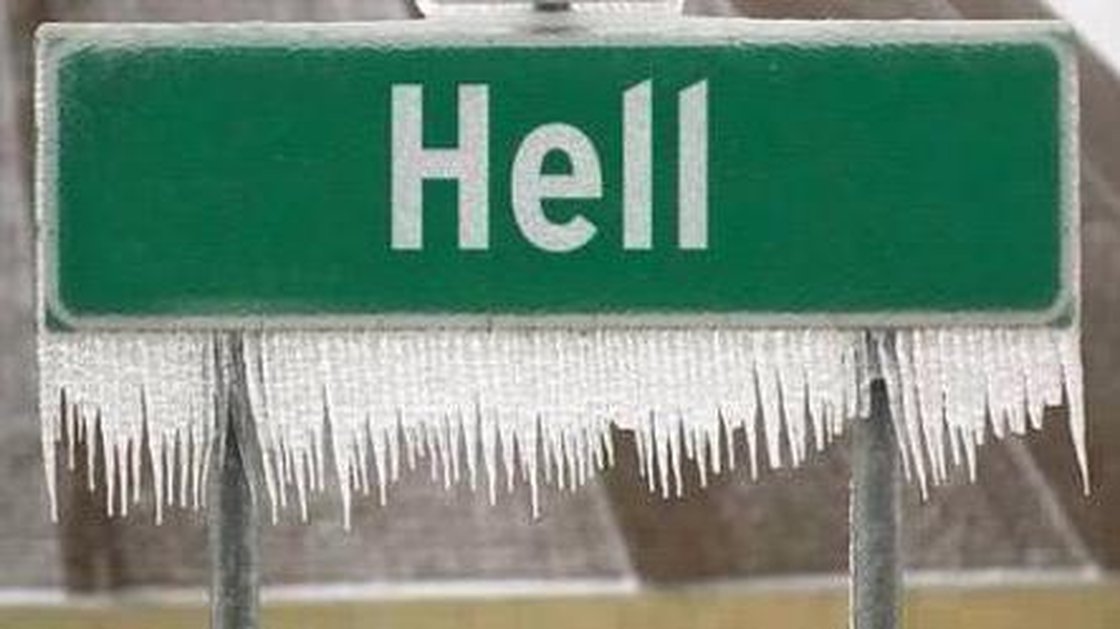
How Bad Was It? Hell Froze Over

Twenty inches of snow fell on us over a three-day period. Temperatures dropped below zero and stayed there, setting several records. Schools closed. Businesses closed. Even Western Michigan University closed for two days, a rare event. The Kalamazoo Gazette said our winter weather in southwestern Michigan was a dreadful as anything experienced over the last hundred years. Conditions were as bad or worse elsewhere in the state.

To a lad who grew up in northern Wisconsin it didn't seem so awful. After all, my hometown of Tomahawk experienced 30 days of below-zero temps in a typical winter. But then various media had some fun telling us how bad things were. I had to admit it was terrible. I learned that Hell froze over.

The sign that welcomes visitors to Hell, Michigan


A few folks have told the geezer to go there over the years. And some who thought I might wander on the way have told me to go straight there. Yet I knew nothing about Hell. A bit of research revealed that Hell, Michigan, is a small village near Ann Arbor. Going to Hell from our home is a 95 mile trip.

A Hell resident who may have been exaggerating just a bit said the temperature dropped to 30 below zero (Fahrenheit) one night last weekend. He somewhat proudly posed beside an abandoned plow that got stuck in a huge snow drift while trying to rescue another truck stuck in a drift. You can be amused by this and other media reports on the subject if you choose. Just navigate to your favorite search engine and go to Hell.

This should be an amazing year. We'll get to enjoy all those things that never were supposed to happen until Hell froze over.

Friday, December 06, 2013

Time for a Blogging Break

The geezer is taking a  vacation from posting new items here. I plan to return sometime in 2014.

Best wishes to your and yours for a joyous holiday season and a happy new year!

Wednesday, November 27, 2013

Thanks for Londyn

Our Thanksgiving celebration this year is tempered by tragedy. Our little next-door neighbor, 23-month-old Londyn, died in an auto accident last weekend.

We mere humans aren't privileged to understand many great mysteries, including why innocents leave this world early and those apparently far less deserving often live long and prosper. But while we mourn losing Londyn, we are thankful for the days she was with us.

We are thankful for the joy she brought to our neighborhood with her sparkling eyes and timid smile. We are thankful she learned to give us “fist bumps” and  “high fives” and to wave hello and goodbye. Most of all we are thankful for the many hugs she generously bestowed on Sandy and me.

Rest in peace, beautiful girl.

Thursday, November 21, 2013

Cheered by an Outage

“Look on the bright side,” Mom used to say when things seemed particularly bleak. Sometimes that positive ray can be hard to find.

Sunday at 6:30 p.m., electricity vanished at more than 300,000 homes, including ours, in southwestern Michigan.  A huge storm with 70 m.p.h. winds was the cause. The power company estimated service restoration in five or six days. The weather forecast said low temperatures likely would be below freezing the next night. 


--Kalamazoo Gazette Photo                                                                            

We started our gas log fireplace, but without an electric fan to circulate the warmed air it wasn't a big help. Our son performed a partial rescue with a small portable generator. He hooked it up to our refrigerator and freezer to save several hundred dollars worth of food.

Monday was unpleasant at our place. No computing. No reading early in the morning or when evening darkness fell. No television. No hot meals. Barely adequate warmth. It is amazing how much we've come to depend upon electricity.

Then I remembered Mom’s advice and thought about a bright side. One appeared. The power went out half way through the Packers’ televised football game. The few players not on the injured list were being crushed by yet another mediocre team. True Packers fans never leave a game until the bitter end. I was saved from another hour or two of intense suffering when the power went off.

Almost as positive as the early end of the Green Bay game for me was  the cautious restoration estimate by our electric company. Our power came on one day after it went out, not five or six. However, several thousand others remain without electricity today. Probably only a few are hoping to stay in the dark until Sunday night so they can miss another Packers defeat. Most people around here are Lions fans.

Thursday, November 14, 2013

"With It" Decision Making

Right there in big, bold type, a reporter informed us that a University of Michigan football player “made a conscious decision not to get rattled anymore.” The coach must have been pleased to know one of his charges was thinking while determining his future conduct.

A few days later, we learned the gunman who terrorized the Los Angeles airport said in a handwritten letter he “made a conscious decision to try to kill multiple TSA officers.” Surely, the disaster would have been even greater had the shooter been blazing away while unconscious.

Now on full alert, the geezer made a “conscious effort” to watch for reports of “conscious decisions.” Sure enough, all sorts of people were making decisions while conscious about matters ranging from the mundane to the monumental. At the rate the new form of decision making is sweeping the nation, a majority will be forced to get aboard the conscious decision bandwagon “sooner rather than later.”

Apparently, no longer is it fashionable to simply do something soon even when one was conscious while deciding to do it.

It now is possible to demonstrate I am “with it” by merging my latest two language pet peeves with two previous ones into one glorious sentence: “Most importantly and hopefully, we now sooner rather than later will be making conscious decisions.”

It has a certain ring to it, doesn't it?

Thursday, November 07, 2013

They, Too, Were Heroes

With Veterans Day approaching, many stories in the media tell us about the actions of heroic military personnel who were crippled or killed facing enemy fire. Some interesting tales are repeated year after year and circulated widely. But others emerge only long after the event when an enterprising historian publishes a previously untold tale.

Lieutenant Charles J. Searl, a World War II pilot, bore a family name familiar to most residents of my hometown of Tomahawk, Wisconsin.  Bronsted-Searl Post 93, American Legion, has been active in veteran’s affairs and community service work since shortly after Armistice Day (now Veterans Day in the U.S.) ended World War I. My father was an active member of the post for more than 40 years. I played baseball for two seasons on a team sponsored by the post. One of my most treasured possessions is a trophy awarded by the Legionnaires for achievements in high school.

Yet all I knew about the post name was that “Bronsted” was killed in World War I , and “Searl” died in World War II.  I knew that because my father told me. I believe some Tomahawk natives with fewer ties to the local American Legion group had no inkling about the origins of the name.

Just a few weeks ago, Lt. Searl’s story appeared on the internet, posted by a Tomahawk resident on Facebook. The Tomahawk Leader carried a similar story this week. The story didn’t originate in Tomahawk, or Wisconsin, or anywhere else in the U.S. An Englishman, Ronald M. Setter, compiled “B-17 ‘Tomahawk Warrior’ A Tribute to Charles J. Searl and Crew.”  Mr. Setter made the story very personal, including ages and home states of all the crew members and some speculation about how they might have spent their off-duty time in the village of Royston, near the airfield where they were based.
Lt. Searl (top row, third from left) and the other crew members with "The Tomahawk Warrior"

Exercising a pilot’s privilege, Lt. Searl named the B-17 heavy bomber he flew after his hometown. “The Tomahawk Warrior,” with its original crew of 10, flew 24 missions to France and Germany, including one on D-Day, after it arrived at the Nuthampstead airbase in March 1944. On August 12, the plane took off for the 25th mission, one it did not complete.

A 25th mission might convey the idea to some that the crew of “The Tomahawk Warrior” would be safe permanently when they returned, but that probably was not the case, and Mr. Setter does not make that claim. American bomber crews suffered horrendous losses early in their participation in mainland European bombing raids. During the first three months (1941) the typical crew completed only 8 to 12 missions before their plane was shot down or disabled.

Apparently to boost flyer morale, the Eighth U.S. Army Air Force decreed that finishing 25 missions in a heavy bomber constituted a “completed tour of duty” and the crew could stand down. I know that happened sometimes, because a Tomahawk resident who lived on our street was sent back to state-side duty after his bomber safely completed 25 missions. However, histories tell us the “25 mission rule” was extended to 30, 35, or more depending on circumstances. By the time “The Tomahawk Warrior” arrived fairly late in the aerial campaign, fighter plane cover was much improved and German resistance was diminished. So, claiming that the “Warrior” crew might have been on its last mission on August 12 would add drama to the story, but probably would not be true.

On Saturday, August 12, 1944, without one crew member who was left behind for unknown reasons, “The Tomahawk Warrior” took off for a bombing run to Versailles, France. Less than an hour later one engine caught fire, and Searl turned over the town of High Wycombe to return to base. Another engine was observed to be on fire.

Mr. Setter wrote, “It has always been accepted that the pilot was trying to find open ground to attempt a landing when he had no chance of reaching his base or even Bovingdon airfield, which was only ten miles away to the north. He would have seen the populated area he was flying over and realized the devastation the plane would cause if it crashed there. It skimmed over the farmhouse of Lude Farm and crashed into open fields opposite. ‘Tomahawk Warrior’ and its crew of nine young men ended life in a massive explosion and fire. No one had bailed out of the stricken plane and no distress signal was ever traced. They stayed together, comrades now for all eternity. . . A short entry in official records at their base read: Takeoff 0618 hours, 0720 no return.”

To my knowledge, no special ceremonies have been held in the U.S. to mark the end of “The Tomahawk Warrior” and its crew. However, the remarkable part of their story is that the Brits in the area (Penn) have never forgotten.

Each Armistice Day, a special service at Penn Church honors the American flyers. Their names are read along with men from the village who gave their lives. Usually, “The Battle Hymn of the Republic” is sung during the service. Small American flags, each with the name of a crew member, are placed with British flags along the path to the church door. The Book of Remembrance in Penn Church has the American as well as the British military names inscribed in memory of their sacrifice.
At Penn Church, the crew of "The Tomahawk Warrior" are not forgotten

Mr. Setter concludes his story: “To all who read this tribute, remember . . . they gave their lives just as bravely and in sacrifice for peace, just as those who were lost on and over the battlefields of Europe.”

Charles J. Searl, age 23, left behind a wife and two small daughters. None of the other crew members was married. Their ages ranged from 20 to 27. 

Thursday, October 31, 2013

Boo

My beautiful wife dressed to greet callers.  Oh, horrors!


Thursday, October 24, 2013

Singing from Memory

As a youth, hymn singing was the only thing I liked about the church services I was strongly urged to attend. Given the chance to join in a rousing rendition of “Onward Christian Soldiers” or “Amazing Grace,” I could belt it out with the best of them.

Nowadays, advancing age and COPD have reduced my vocal offerings to something perhaps best described as croaking. Also, I've been attending People’s Church, a Unitarian-Universalist congregation, for only a couple of years—only long enough to learn a few words of  hymns featured there. So when I visit People’s, my musical contribution is minimal to say the least.

Last Sunday, a mature man I’d never seen before took the vacant seat beside me. He sang all three hymns perfectly. He knew every word. He knew each melody. I was amazed.

When the service was over, I told him how impressed I was with his singing. Then we introduced ourselves. Harold Beu said, “Those hymns are easy for me. I’m a retired UU minister.”

We had a nice chat. I’m convinced Rev. Beu could teach me a lot about belief systems. I’m equally certain he could never teach me how to sing hymns the way he does.

Thursday, October 17, 2013

Battling Baseball Boredom

Some time ago my love affair with baseball began a long slide that ended just short of complete indifference.

Most of the boys in my northern Wisconsin hometown participated in “America’s pastime” as players, dedicated fans, or both. A major league franchise didn’t arrive in Milwaukee until we were teenagers, so we supported various teams. We had ties to Chicago through tourism, thus Cubs fans probably were in the majority. Quite a few St. Louis Cardinals backers lived in my neighborhood. I bucked the trends by supporting the White Sox, after briefly being enamored with the Detroit Tigers.

We didn’t have Little League baseball, but a summer sports program offered early organized playing opportunities. I started as a catcher at age 11 on the team that competed against nines from other cities. Later, I donned “the tools of ignorance” (face mask, shin guards, chest protector) for high school, American Legion, and county league teams.

When the Braves franchise moved from Boston to Milwaukee, Wisconsin went baseball crazy. Normal business activity ground to a halt in Brewtown when the local heroes took the field. Every adult was in the ballpark or glued to a radio listening to the action. Interest was only slightly less elsewhere in the state. I joined the crowd as a rabid fan.

I'm catching some baseball once again
My passion began to wane during college days. My agenda became filled with more interesting activities than two- to three-hour sessions beside a radio or in front of a television set when half the time consisted of lulls between pitches and innings.

Later, following baseball became more of a chore than an entertainment. I was forced to watch lots of games. As a weekly newspaper editor, it was necessary to report on local contests. However, it was possible to avoid some of those time-consuming tasks by writing stories using scorebooks supplied by team managers. I became quite adept at creating descriptions of games I never saw.

But as sports editor of The Daily Tribune in Wisconsin Rapids I had no way to avoid baseball overkill. Rapids had a Minnesota Twins farm team in the Midwest League. Interest was high in the games played by the young professionals. I was required to attend nearly every home game (a reporter would fill in for me in extreme emergencies). There were 62 home games each season, almost all of them night games.

Covering minor league ball had interesting moments. It also forced me to watch some error-filled contests that lasted far into the night. Often it was midnight when I got to the office to compile the statistics and write my story for the next day’s paper.
My regular work hours started at 7 a.m. or earlier, six days a week.  My enthusiasm about baseball soon began its long slide downward. Later, other things pushed it further out of my life.

Business and family matters became much more important than following what I had come to view as dull athletic contests. Pro football began to replace baseball as the national pastime. It seized the American sports imagination, including mine. In retirement, I caught the golf bug. Had I still cared about baseball, time to follow it was seldom available.

Just as I my interest in baseball was nearing zero, we moved to Michigan. Since our arrival, pro football excitement waned-- the Detroit Lions seldom won a game. The Tigers won lots of games, and their fan base expanded. This year, home attendance topped 3 million. Anyone who follows news as I do had trouble avoiding stories about the Tigers. To learn directly what it was all about, I tuned into a few games on the tube. Unfortunately, I usually lost interest and moved on to something else well before the contests ended.

Now the Tigers are deep into the playoffs. The team features two of the best pitchers in the game and some powerful hitters. Not watching games right now causes people to be left out of a lot of conversations. I don’t like to be lonesome, so I’ve been watching the playoffs on television.

Unfortunately, even the playoff games strike me as less than thrilling. A few descriptions of strategies developed since my days as a player and fan have been interesting, but nothing has changed about the boredom fostered by the same old frequent periods of nothing much happening. I was close to ending my brief stint as a resurrected Tigers enthusiast.

Happily, I accidentally discovered a way to enjoy watching baseball on the tube. I was reading an intriguing book when a Tigers’ playoff game started. Feeling a bit lazy, rather than switch activities completely, I just stayed where I was and switched on the TV. I saw every bit of the baseball action and finished 70 pages of a good book during the dead times in the game. Chances of running out of interesting books are low; I’m staying on board as a Tigers fan, although not exactly a full-time one.  

Thursday, October 10, 2013

A Dishonorable Honorable

Some years ago I worked with a manager who earned a reputation for lying frequently, although there seemed to be no reason for most of the fabrications. One subordinate observed that his leader even lied when it would have been much easier to tell the truth. Is it possible that some folks have a mysterious built-in compulsion to choose deceit over honesty?

My congressman, Fred Upton, may fit that mold. He has done a good job lately of tossing aside big chunks of his integrity.

In August, Upton said, “I know some of my colleagues have suggested that they will not support (a continuing resolution to fund government) unless the Affordable Care Act is defunded. I think this would be a lousy idea and certainly harm the most vulnerable.”

Early this month, Upton voted to shut down the federal government unless President Obama agreed to stop implementation of the Affordable Care Act.

A few hours after the shutdown went into effect, Upton said, “The Affordable Care Act is not ready for prime time, but shutting down the federal government is not the solution.”

Upton chairs the House Energy and Commerce Committee. He supported the relicensing of the accident-prone Palisades nuclear plant, and has long proclaimed the safety of nuclear plants.  However, this summer when radioactive material leaked into Lake Michigan from Palisades Upton visited the plant and termed the leak “unacceptable.”

Early this year, Upton requested more funding for the Environmental Protection Agency to clean up a large area of chemically polluted soil in the Kalamazoo. But on March 21 he voted to drastically reduce the budget of the Environmental Protection Agency. The agency then said it didn’t have enough funds to clean up the Kalamazoo disaster area.

It is customary to refer to Members of Congress as “The Honorable” John or Jane Doe. Upton has demonstrated that he no longer deserves that salutation. If you live in southwest Michigan and are looking for a rascal to turn out, one is close at hand.


Thursday, October 03, 2013

More Than a Mess

Several observers termed the shutdown that separated 800,000 federal workers from their jobs on Tuesday a “mess.” A few called it a “debacle.” I think stronger language might be in order to describe what a small group of Tea Party demagogues in Congress has foisted on our country.

In addition to ruining the lives of a lot of innocent people, many already suffering financially from the effects of a funding sequester, what the ultra-right wingers have done will waste vast amounts of our tax money and could be downright dangerous for many of us.

The government shut down briefly several times during my quarter century of employment with the U.S. Forest Service. In addition, a major unit merger advertised as a cost-saving measure seriously affected my work and the work of those around me. It ought to be obvious that when employees are engaged in making contingency plans for big changes in their organization, or carrying them out, they have little time to do the normal work they are paid to do. That work has to be done some time. Often, catching up after order is restored involves hiring additional employees or paying contractors. Each day the current shutdown continues will cost us billions of scarce tax dollars to be paid in the future.

Others have thoroughly discussed the huge negative impact on our still-fragile economy of abruptly canceling the wages of 800,000 people and suspending contract work that pumps mega dollars into private firms. Tying up federal funds also has a ripple-down effect that damages important state and local government activities

YOU are nonessential. (well, maybe)
Far scarier than economic consequences are risks to public health and safety inherent in the shutdown. Despite congressional exemptions to keep military and some other categories of employees on the job, there are risks in the present situation. Some result from the complexities of deciding precisely which employees are essential. Even when that exercise seems straightforward, it often is not.

For example, the Forest Service contingency plan for the shutdown, issued on September 20, said, “This plan assumes some Agency activities will continue that are essential to protect life and property. . ."

The first activity listed is “Fire Suppression including fire fighters and all necessary equipment costs . . .”

Sounds like an easy plan to carry out. But what seems a no brainer is not--a whole lot of difficult judgments are involved. They have to do with the nature of the fire suppression organization.

The firefighting organization is a combination of a small number of full-time professionals, a larger number of Forest Service people who have other full-time jobs and who work on fire problems only as needed, and an even larger number of contractors and part-time employees. Exactly who is essential can be a bit mysterious.

Consider this possibility. A relatively new full-time employee, let’s call her Josephine, works at a low-level purchasing job in a small unit. Prioritizing the unit’s work indicates the best course of action is to furlough Josephine as “nonessential.” Remaining employees with more experience could carry out the most important unit activities.

However, Josephine has completed some special procurement training and done satisfactory work when called to help handle logistics on a major forest fire. As a qualified fire support person, she could be called away from her normal job for fire duty, but it is impossible to predict when that might happen, or if it might happen over a period of weeks or months, or possibly even years.

Is Josephine “nonessential” because of her primary job, or “essential” because of fire assignments that may, or may not, materialize? How that seemingly small decision is made could be a factor in putting lives or property at risk.

In another agency, reports of shutdown effects say “routine food inspections have been suspended.” Sounds somewhat innocent, but think about it. Do you want chances taken with the quality of the food you eat? What god-like person decides which food inspections are routine, and which are “essential"?

And yesterday, James Clapper, Director of National Intelligence, told a Senate committee that he could not guarantee our national safety because 70 percent of our intelligence community has been furloughed. Clapper pointed out that spies who are poorly paid, or paid not at all, tend to switch sides in the world of espionage. Imagine that. Apparently the Tea Party crowd in Congress could not.

The federal government shutdown is shaping up to be much more than a mess or a debacle. It’s looking a lot like a full-blown disaster.

Thursday, September 26, 2013

Don't Play Games with St. Vincent

Near the end of my days as sports editor of The Daily Tribune, football fans in Wisconsin Rapids and everywhere else in the state were shocked when their hero Vince Lombardi left the Packers and went to the Washington Redskins as coach and general manager.

The biggest fans at the newspaper were the boys in the backroom—the printers who came to work as early as I did.  I was very busy early every morning, and the back shop crew had strict orders from the publisher not to bother me by asking for reports on the latest scores and happenings. When I had processed that information, however, they read every word before turning the paper accounts into type.

The printers were a pretty jolly crew, and we exchanged a lot of good-natured banter at times when deadline pressure was absent.  I decided to play a little trick on them one afternoon after most of them had gone home and things were slow at the sports desk.
A legend not to be trifled with

I snitched some blank teletype paper from the wire editor's desk and wrote a story with an Associated Press dateline saying Lombardi had decided to return to the Packers.  He once again would take over the coaching reins as well as the general manager duties.  And he guaranteed a Super Bowl victory at his press conference announcing the change.

I wrote a headline, specified a modest type size for it, and indicated it should appear only in a single-column format.  It was Tuesday afternoon.  I clearly marked the story "Hold for Thursday" and dropped it in a box where we placed material that didn't have a pressing time element.

Very early the next morning, a printer timidly approached my desk clutching the story.  "I know I'm not supposed to bother you," he said, "but are you absolutely sure we shouldn't run this Lombardi story today?  This is a fantastic thing."

I said I thought it was just a routine announcement, and we were pretty far from Green Bay.  There wasn't any rush about running it, and my space was really limited that day. I told him to put the story back in the hold box.  I figured I would go to the back room as soon as my deadlines were met and have a good laugh with the boys about the fake article.

Before that could happen, the head of the printing plant entered Editor Carl Otto's office with the story.  I was summoned almost immediately.  Otto thought the story was page one material, and I had lost my mind.

When I explained the hoax, Otto failed to find any humor in the situation.  He questioned my ancestry as well as my intellect, and he could be very forceful.  I never tried another stunt like that again—anytime, anywhere.

(This story was first published in “Days with the Dads: Recollections of a Small-Time Journalist”)

Thursday, September 19, 2013

Have It Some Way


There’s no doubt people can be conditioned by training or repetition to occasionally ask a ludicrous question. The geezer has for years conducted an unscientific, but comprehensive, survey aimed at proving the point.

I almost always order black coffee in fast-food or chain restaurants with breakfast or lunch. About nine times out of ten, this happens:

The server takes the complete order, and then asks, “Do you want cream with your coffee?”

To that standard question, I have a standard reply, “Thanks, but I never use cream in my black coffee.”

After thinking about the gaffe, the server and I, and anyone else within earshot, usually share a few chuckles. A long-time employee at my favorite fast-food place has made a game of it. If she sees a newer server taking my order, she runs over and yells, “Do NOT ask him if he wants cream!” My friend thus heads off any possibility of a sarcastic response.

Recently in another fast-food place, a rookie server’s question left me speechless. He asked, “Do you want cheese on that cheeseburger?” 

Thursday, September 12, 2013

Painful Religion

Three hours in a dentist’s chair with a jaw full of pain killers and a mouthful of various drills, saws, probes, cotton balls, mirrors, and fingers gave me plenty of time to entertain a few thoughts. The primary one was how I might gracefully get out of there. I couldn't come up with an honorable way to flee,  so I concentrated on contemplating how I got there.

I concluded that religion got me there.


So there is no misunderstanding, my mother was a wonderful woman I dearly loved. She served her family and community as conscientiously as anyone I've known.  A big part of her service was some 20 years as First Reader for the Christian Science Society in my hometown (A First Reader, elected by the congregation, is a lay person  considered by many to be the leader of the local church organization).

My mother never once directly hurt me. But I believe her faith caused me considerable pain over many years.

Like most mainstream Christian Scientists, Mom did not reject seeking “skilled hands” to help with physical problems. According to her philosophy, it was OK to get checkups by dentists and medical doctors and to use their services to deal with some problems. It was not all right, however, to accept treatments that injected “foreign substances” into ones body unless that was absolutely necessary.

Thus, for most of the first 16 years of my life in Tomahawk, Wisconsin, I visited Archie Houns, DDS, regularly for dental checkups and any necessary repairs. Mom instructed Dr. Houns never to use any pain-deadening chemicals, even when drilling deeply to remove decay. Dr. Houns was not gentle.  I had quite a few cavities. I experienced a world of hurt.

During my earliest visits to Dr. Houns, Mom stayed by my side and held my hand to help me endure the waves of pain caused by his work. When motherly hand-holding became taboo as I developed into a macho male, I built up my forearm strength considerably by clutching the arms of the dentist’s chair in a stranglehold when probing or drilling struck a nerve, which was most of the time.

I developed a lifelong terror of visiting dentists. So after I left home and Mom’s complete control at age 17, I discontinued regular dental checkups and requested every pain killer in the arsenal when advanced tooth decay demanded I get extractions or fillings. Avoiding regular checkups resulted in a high number of serious dental problems. My finances suffered mightily also, as I doled out big bucks for root canals, crowns, and bridges.

Today, my tooth line features many empty spaces. Others areas are populated by artificial structures, with only a few often-filled natural teeth holding things more-or-less together. What once might have been  routine visits to the dentist now can blossom into surgery, as my most recent experiences did.

Many people who use their faith to guide them to right living do a great deal of good in our world. However, many others seem dedicated to perverting the best religious values, and great evil can result.

Students of history have no problem describing instances when people killed, maimed, and tortured fellow humans in the name of religion. We need only tune into the daily news to learn of new atrocities committed by religious fanatics.

In comparison, the pain a religious belief brought to me directly and as collateral damage was minor. But it has been very real, and like other damage caused by adherence to questionable religious dogma there was no good reason for the suffering.

Thursday, September 05, 2013

They Went Bananas

What’s the strangest vehicle seen recently traveling through your neighborhood?  At our place it was a banana on wheels created by a couple of wild and crazy guys.

We were chatting with neighbors on Labor Day when the “Big Banana Car” drove by. Passengers waved and shouted, and we returned the recognition. The banana passed us another three times within a half hour. Promoter Tom Brown, the driver, apparently was selling rides to families looking for a unique holiday experience.

According to the Kalamazoo Gazette, Brown and friend Steve Braithwaite had the ideas for the mobile banana during a brainstorming session in which they were trying to come up with a novel project. Braithwaite, from Oxford, England, is a
The Big Banana Car gets attention wherever it goes
hot rod mechanic. He used a 1953 Ford F-150 truck frame and power train, fiberglass, foam, and other materials to build The Big Banana, which has been traveling area highways and byways for the past four years.

The car is 22 feet long and seats three passengers. It’s by no means a “green banana,” getting only 8 miles per gallon of gas, but it can travel long distances. Its zany creators have a goal of driving it around the world, however visa and other problems have interfered with that dream. The banana has visited Houston, Texas, where it won first place in an art car show. It has carried advertising messages by Del Monte, Chiquita, and Planet Smoothie, and Brown constantly solicits new business.

Aside from money-making goals, Brown says The Big Banana was built to “make people laugh, have a good time, and put smiles on their faces.” It surely met that goal for us last weekend.

What’s next for Brown and Braithwaite? If The Big Banana has enough commercial success to provide funding, they will build another vehicle. At the moment, the leading idea is to construct a Submarine Sandwich Car. We can hardly wait.

If you’re fascinated by nuttiness, you can get more info and view many photos at www.bigbananacar.com. Among other useful things you can learn there is that the official name of The Big Banana is “The Braithwaite, Cavendish, Four Seat, Velos-a-Nana.” Wonder what they’ll name the submarine sandwich creation?

Wednesday, August 28, 2013

Syria. And Then What?

Newt Gingrich is a disagreeable man in the worst sense of “disagreeable.” He set the stage that Carl Rove, an equally despicable political operative, exploited to create the current childish legislative stalemate in Washington, D.C.

As Speaker of the House, Gingrich was the first Republican leader to threaten to shut the government down if he didn’t get his way at budget time. Fortunately, President Clinton called the speaker’s bluff and he backed off. Later, Gingrich led the impeachment troops against Clinton in an effort to persuade people that lying about some casual sex acts constituted “high crimes and misdemeanors.” Even some of his closest allies couldn’t stomach going along with that line of nonsense.

The geezer agrees with a thoroughly disagreeable pol
The geezer has difficulty finding any area of agreement with Gingrich. But this week I found myself in complete agreement with no less than five public statements by the failed Congressman and presidential candidate. Gingrich does not want the U.S. to enter the Syrian civil war with military action. In interviews with reporters and on the internet, he said:

* The recent atrocities in Syria and those that have taken place over the past two years are deplorable and inhuman. Before bombing Syria over the regime’s latest crimes, however, we should stand back and ask, “And then what? I agree.

* A brief bombing campaign in Syria might make the U.S. and its allies feel like they are doing something, but it will prove nothing. It is unlikely to tip the scales in the civil war to favor the rebels. I agree.

* Both sides in Syria are bad. One is a brutal dictator, and the other includes radical Islamists and terrorists who are dangerous now and who would be brutal in power if given the chance. I agree.

* We will not be able to spend the time, money, and blood needed to create a desirable outcome in Syria. There is no victory to be had there. I agree.

* Conflicts in Syria, Egypt, and Libya are small threats compared with the disaster that could ensue and the lives that would be endangered if Iran succeeds in its drive for nuclear weapons. We should focus on the truly big threat instead of the headlines of the day or we will face much worse headlines in the future. I agree.

Haven’t we learned enough about the tremendous and unsustainable costs of removing minor despots in the Middle East? Mr. President, this is no time for an ego trip to show how tough you can be. Sit back and ask, “And then what?”  

Thursday, August 22, 2013

Next for Big Ten Football--The Big Twenty?

“How many teams are in the Big Ten now,” she asked?

I had to think a minute before answering: “Fourteen.”

That bit of numerical craziness somehow seems fitting. The relative sanity that once prevailed in college football is vanishing rapidly as the almighty dollar lures institution officials to forsake the last remnants of tradition and stop pretending they are sponsoring amateur teams primarily to benefit students.

But then, Big Ten conference membership often has been a bit bizarre. After starting with seven schools in 1896, the conference quickly grew to include ten midwestern universities and gain the name that became official years later. However, Michigan was kicked out in 1907 for violating rules. So the Big Ten had only nine functioning members until the Wolverines returned from exile in 1917.

The University of Chicago, a powerhouse throughout the early days of college football, was a charter member of the conference. But the Maroons’ gridiron program fell on hard times in the 1930s, and the school dropped football in 1939.

Robert Hutchings, the Chicago president, said years later in an interview for Sports Illustrated, “The university believed that it should devote itself to education, research and scholarship.” What a novel thought! An educational institution should focus on academics.

The Big Ten numbered nine for the next ten years. Several attempts to add Notre Dame failed, although the school was a national football power whose South Bend, Indiana, location was smack in the midsection of the Midwest. Rumors had it that the Irish wanted in, but several rival schools kept them out. Instead, Big Ten schools voted to actually become ten again in 1949 by adding Michigan State to their ranks.

Perhaps in a “tit for tat” action, the Notre Dame trustees said no in 1999 when Big Ten officials tried to negotiate a deal to add the Irish to the lineup.

The tensome held for a long time, but ultimately the administrators just couldn’t resist making sense into nonsense. In 1993 they added Penn State to the conference. That not only again disrupted the namesake math, but it stretched the definition of “Midwest” beyond reason. In a feeble bow to tradition, conference commanders voted to keep the Big Ten name, but alter the logo to include a semi-hidden “11” in their emblem.  The “little 11” logo lasted only until 2011, when Nebraska became the 12th Big Ten member.

Ten that is eleven didn't last. Would The Big Something be appropriate? 
Conference officials didn’t bother to stick a little “12” into the logo. They knew bigger things lay ahead. Sure enough, next year the University of Maryland and Rutgers University will field Big Ten teams for the first time. Maryland’s location is self-evident, and the last time I looked Rutgers was in New Jersey, a midwestern state if there ever was one. But regional identity no longer is considered a virtue by the “Big Something.”

University of Wisconsin Athletic Director Barry Alvarez recently said, “We’ve come up with a thinking that we want to be national, we want to have to play at least two bowl games in Florida, we want to play in Texas, we want to play in the desert (Arizona) and we want to play in California. Also New York—so we can spread our brand nationally.”

Sounds more like a corporate marketing exec than an educational institution official, doesn’t he? Alvarez is not alone.

Michigan State AD Mark Hollis said, “This (adding Maryland and Rutgers) creates new opportunities to be where our alums and donors are.” His comments came in a discussion about entering more television markets. The Big Ten now has its own network. After the 2012 season, the conference paid each school $25.7 million  as its share of television loot, most of it earned by selling ads through its own network.

The expansion frenzy is far from over. In public statements, Michigan AD Dave Brandon has strongly hinted at more growth. That probably will mean going to 16 teams in two eight-team divisions. It’s looking more like a professional league alignment all the time.

Sorry sports fans. I can still work up a little rah-rah spirit at the prospect of a traditional Wisconsin-Minnesota game or a Michigan-Ohio State contest, but Rutgers vs. Nebraska leaves me cold. Count me out. I’ll concentrate on backing the Green Bay Packers. At least they don’t deny being professionals who want to rake in more dollars by promoting their “brand.” 

Thursday, August 15, 2013

Yes, Let's Debate Security vs. Freedom

Strident voices have been busy of late proclaiming Edward Snowden a heroic whistleblower for disclosing details of U.S. intelligence gathering. Less loud, but more thoughtful, commentators argue that he is a traitor whose systematic leaking of classified information has seriously damaged our security.

Honest disagreement is possible about which label Snowden deserves. However, it is hard to disagree with President Obama’s statement that it is time for a national discussion of how much personal freedom and privacy Americans should be willing to sacrifice in the interests of security. That discussion now is occurring—in the media, on the internet, and in gatherings of families and friends. 

Although I believe we must continue to combat terrorism, I think we have overreacted to 9/11 in ways large and small.

The huge mistakes are obvious. Invading Iraq on a pretext and hanging around for years in Afghanistan at tremendous costs in lives and dollars have done incalculable damage to the strength of our nation and our position in the world. We can’t undo those blunders, but at least we gradually are withdrawing from untenable positions in the Middle East.

I want to be there during searches
Personal experiences color my thoughts about overdoing security measures in smaller ways. Security people did it right the first time my luggage was searched in an airport after 9/11. I was allowed to stand next to the searcher and observe every move. And, my belongings were handled carefully and returned to my suitcases in a semblance of order. This was exactly how our luggage was searched several times after airline trips to Mexico before 9/11. I have no objection to that sort of procedure.

More recently, however, both I and beautiful wife Sandy had our luggage searched when we were not present. Apparently, the system had changed, and not for the better. When we opened bags after the trips, our belongings were in complete disarray.

Searching one’s property without a warrant or some reasonable suspicion of wrongdoing when the owner is not present to me is a clear violation of constitutional law. There have been documented cases of security personnel stealing items from luggage they were inspecting, another reason this practice should be stopped. If requiring that the person whose property is searched be present causes travel delays, so be it.

Several years after 9/11, Sandy was taken out of a line in the Kalamazoo airport for a strip search. Admittedly, she appears to fit the classic profile of a terrorist. On tip toes, she can stretch to a menacing 5 foot 2. The majority of her hair is gray. She is more than slightly beyond the age associated with optimum physical strength. Bottom line: Sandy is not a particularly threatening person.

It probably is necessary for security people to pick subjects at random for intensive searches to avoid charges of profiling, but what followed Sandy’s selection was uncalled for and served no purpose.

First, she was told to leave her purse, ticket, and boarding pass behind as she was led to a search booth. She refused. After some argument, the security types allowed her to take the items along.

A man entered the booth and instructed Sandy to remove her clothing. She demanded that he be replaced by a woman. After more argument, her demand was met. (I later advised her that the experience might have been enhanced had she stuck with the man, but stopped saying that when she obviously failed to admire my brilliant wit.)

Sandy refused bad treatment and made her refusal stick. How many others passively follow orders? We haven’t made trips by air in the last few years, so perhaps the offensive and probably illegal invasions of privacy have been modified. If not, they should be.

How much freedom and privacy should we be willing to give up in the interest of security? There’s a reasonable balance to be struck. Perfection isn't possible, but we need to discuss the issues and make necessary changes in the systems now in place.